
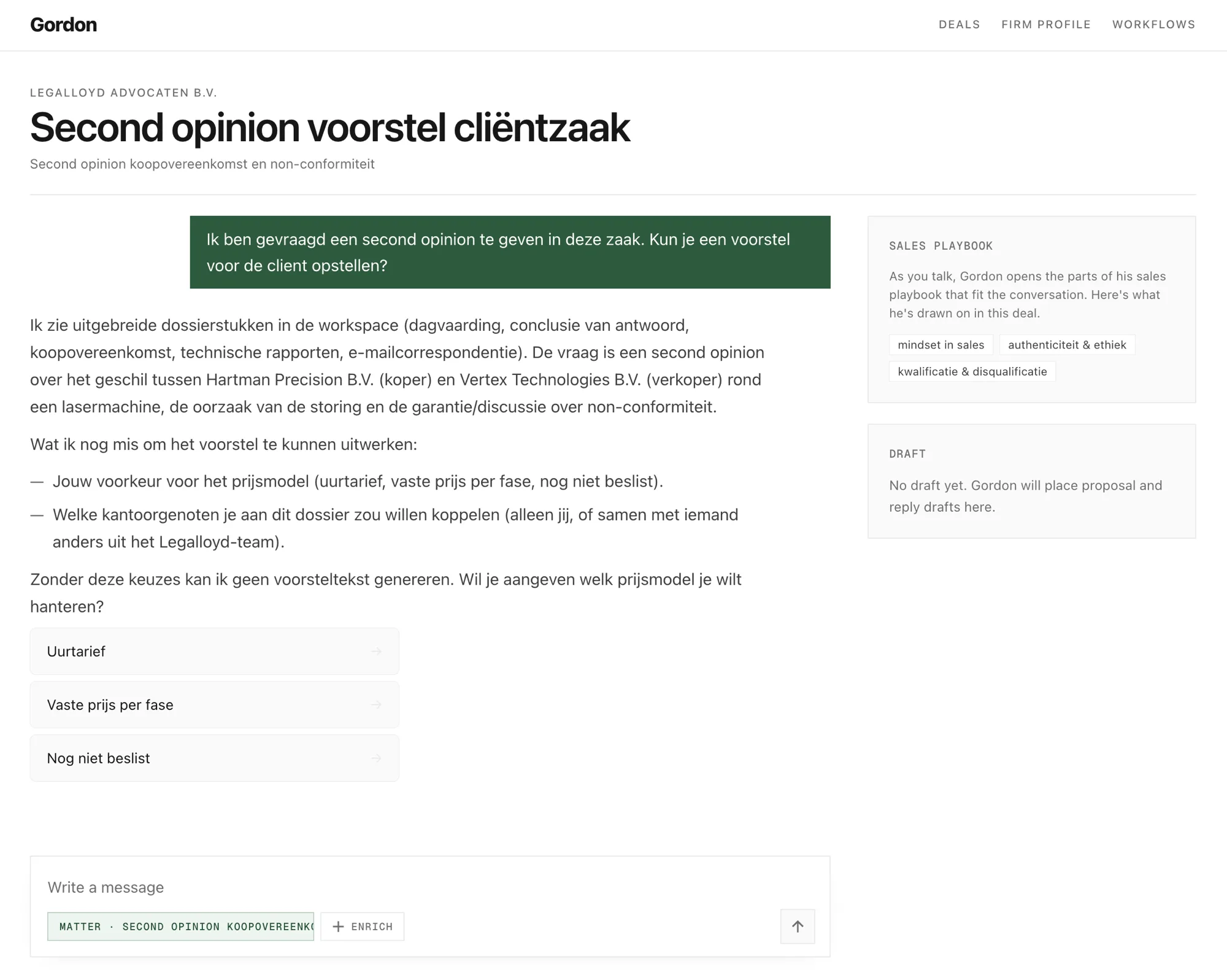
The deal, five ways
One firm profile, one matter, one conversation per stage. Gordon carries what you told it into every next step.
Firm profile
Set up once, carried into every deal
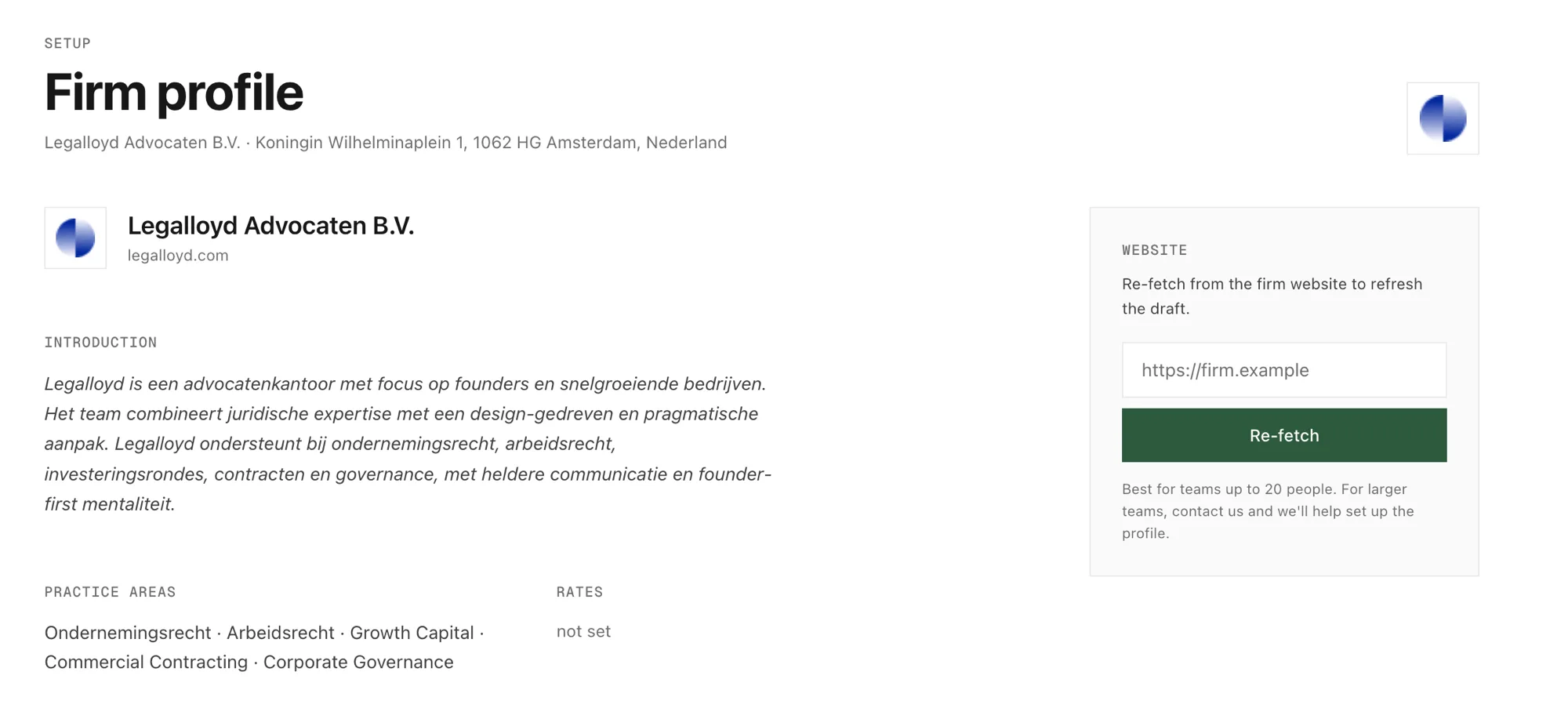
Point Gordon at your firm's website and it drafts your introduction, practice areas and team for you to check and edit. Add your rates and terms. Gordon carries all of it into every matter, so you never re-explain yourself.
Where the deal stands
Pick the moment, get the right coaching
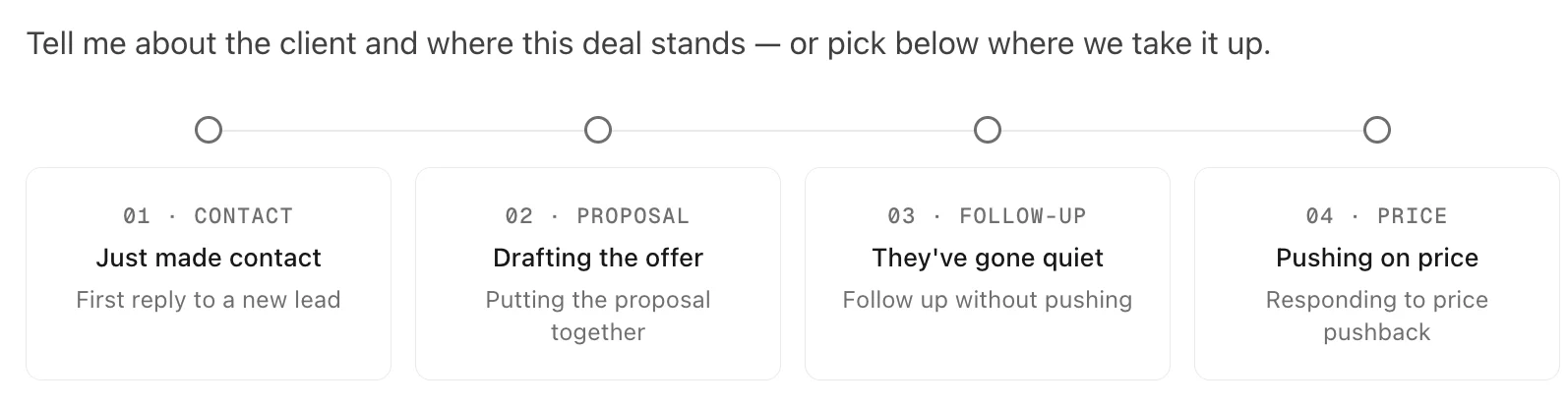
Just made contact, drafting the offer, gone quiet, or pushing on price. Four entry points, one per stage of the cycle. Gordon gathers context the way a colleague would, one question at a time, and reads the documents already in your Mino workspace.
The proposal
Plain text you can paste into an email
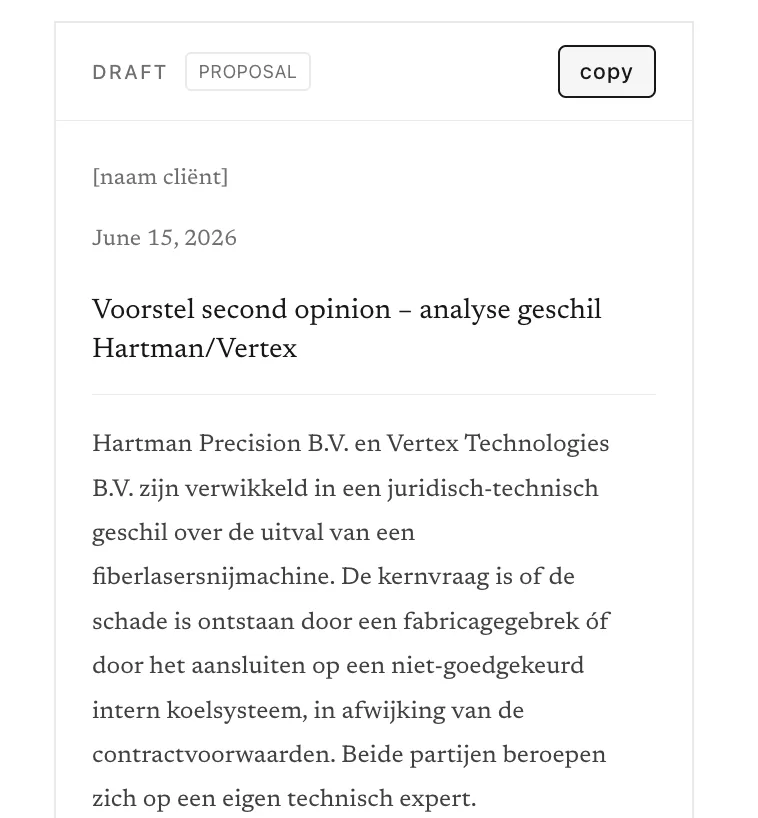
A proposal drafted from your firm profile and the matter, with the fixed-fee amounts left as placeholders for you to set. Describe a matter type once, an investment round say, and Gordon turns it into a reusable workflow: phases, deliverables, timing and a fee indication.
The playbook
The sales knowledge behind each answer
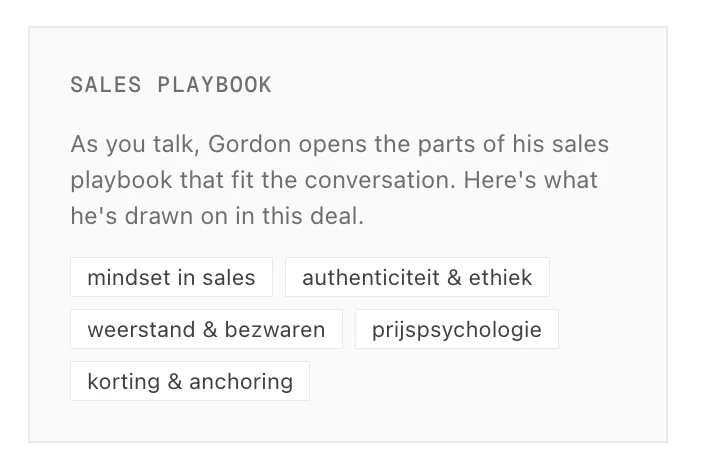
Gordon draws on a body of sales knowledge distilled into skill documents and opens the chapters that fit the conversation. Paste in the lead's reply and Gordon names the objection type and gives you a way through it. Silence for two weeks and Gordon drafts the follow-up.
With a Thea timeline
Show the lead you already understand the case
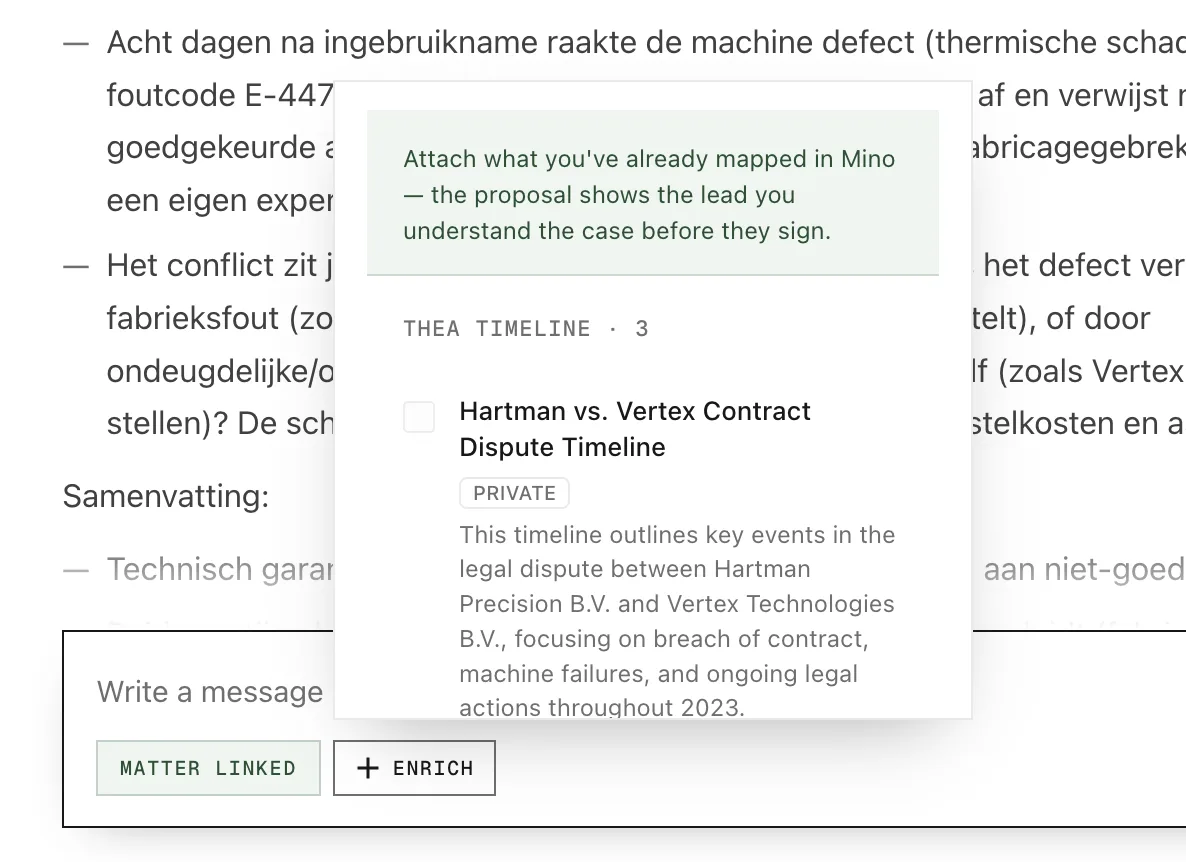
Where it helps, Gordon suggests splicing a Thea timeline of the matter into the proposal. The lead sees that you have understood their situation before they sign, and the same timeline is the one you work from once the engagement starts.
How lawyers use Gordon
The lead says the words: send me a proposal. The cursor blinks.
Open a new deal, pick Drafting the offer. Gordon asks a few questions about the matter, reads the correspondence in your workspace, and drafts the proposal on your firm profile and rates.
Edit, set the fees, paste it into the email.
Two weeks of silence after a good conversation.
Pick Gone quiet. Gordon drafts the follow-up that keeps your standing, without sounding like you need the work.
One message, sent on your terms.
They write back that the fee is too high.
Paste in the reply. Gordon names the objection type, and a price objection is rarely about price. It coaches the move: anchor, reframe, hold, and gives you the words.
You answer the real objection.
The proposal shows you already understand the case
Thea reads the facts of a matter and builds the timeline. Gordon works on the step before the matter is yours. Where it helps, Gordon suggests putting that Thea timeline into the proposal, so the lead sees the sequence of events mapped before they sign.
The hand-off is clean. The timeline that strengthens the proposal is the same one you work from once the engagement is signed. Gordon works in English and Dutch.
Draft the proposal for the Vermeulen shareholder dispute. Fixed fee per phase.
Drafted on your firm profile and the shareholder-dispute workflow: three phases, deliverables per phase, fee placeholders left for you. The correspondence in the workspace shows the dispute started with the March 2025 dividend decision.
There is a Thea timeline of this matter, eleven events. Add it to the proposal?
European infrastructure
Your documents and correspondence are processed and stored in Europe. The model Gordon runs on by default is hosted in an EU data centre.
Your own AI key
Add an Anthropic, OpenAI, Azure or Mistral key and Gordon drafts on it, under your own contract with the provider.
No training, ever
Your firm profile, proposals and client correspondence are not used to train AI models. We use enterprise endpoints whose terms prohibit training on customer data.
You control access
Row-level security per matter. Two-factor authentication on every account. Gordon never contacts a client on your behalf.
Win the work. Keep the judgment.
Set up your firm profile once and have the next proposal drafted before the lead's coffee goes cold.
Gordon is included in Mino Pro.


