Gordon coaches you through the deal: from first contact to signed engagement

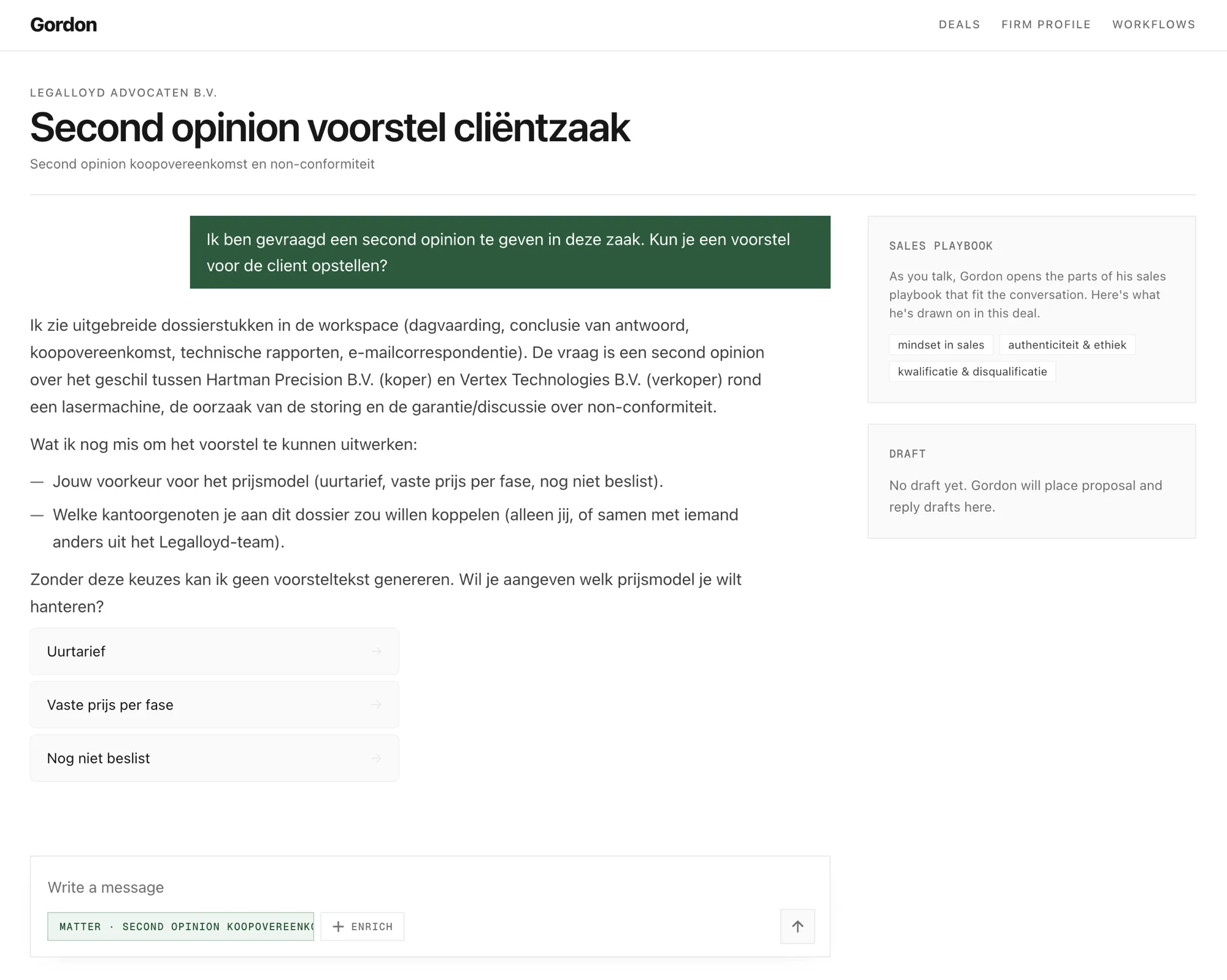
There is a moment most lawyers would rather skip.
A good lead comes in. The work is interesting, the client is serious, the fit is real. You have the conversation, it goes well, and then they say the words: ‘send me a proposal’. You sit down to write it, and the cursor blinks. How much do you charge for this. How do you describe the work without sounding either vague or boastful. Do you mention a fixed fee now or wait. And two weeks later, when you have heard nothing back, do you follow up, and how, without sounding like you need the work.
None of this is law. You spent years learning to argue a case and almost no time learning to win one. The deal cycle, first contact to signed engagement, is its own craft.
Gordon is a coach for that part of the work.
What the deal cycle actually is
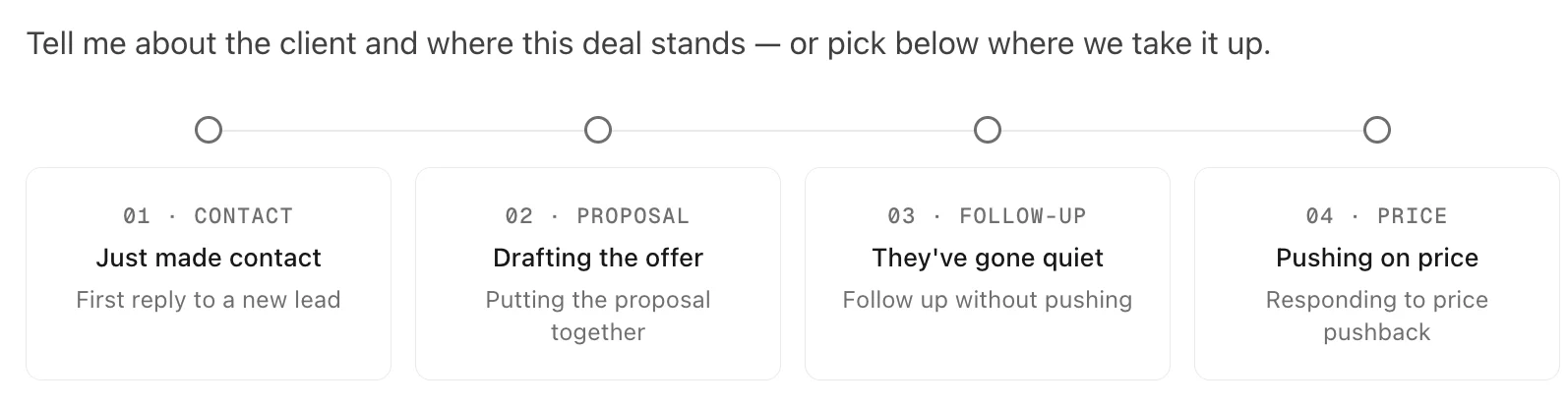
Winning a matter is not one act. It is a sequence, and each step has its own failure mode.
You write a proposal that has to land the value without overpricing the relationship. You follow up when they go quiet. You handle the objection when it comes.
Three stages. Gordon works them through with you: proposal, follow-up, negotiation.
What Gordon is, and what he is not
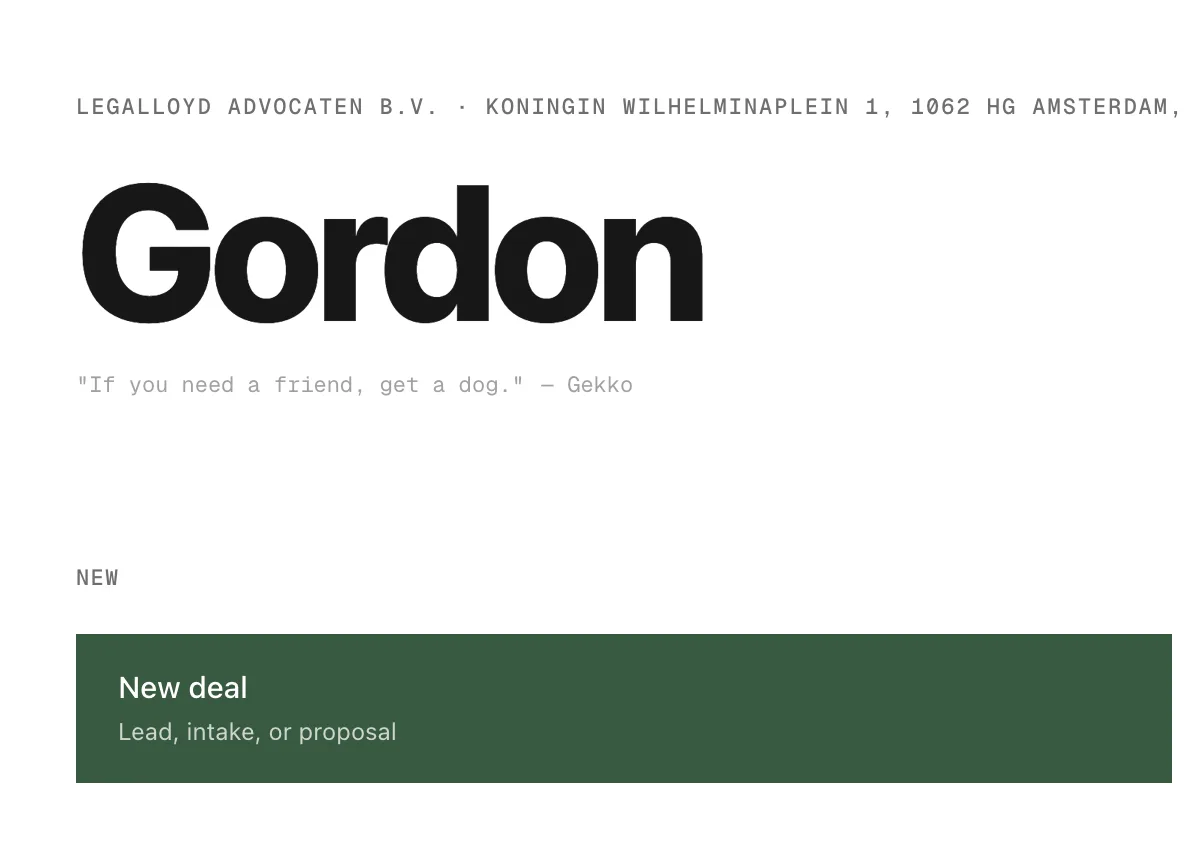
Gordon is named after Gordon Gekko: direct, sharp, unsentimental about winning work. He does not flatter and he does not hedge.
He is a coach, not an autopilot. Gordon never sends anything to the client, never speaks to them as your firm, and never decides for you. He drafts, reads, and advises; you keep the judgment and the send button. This is the same principle that runs through the rest of Mino: the AI orders the information and sharpens the moment, the lawyer makes the call.
How Gordon works
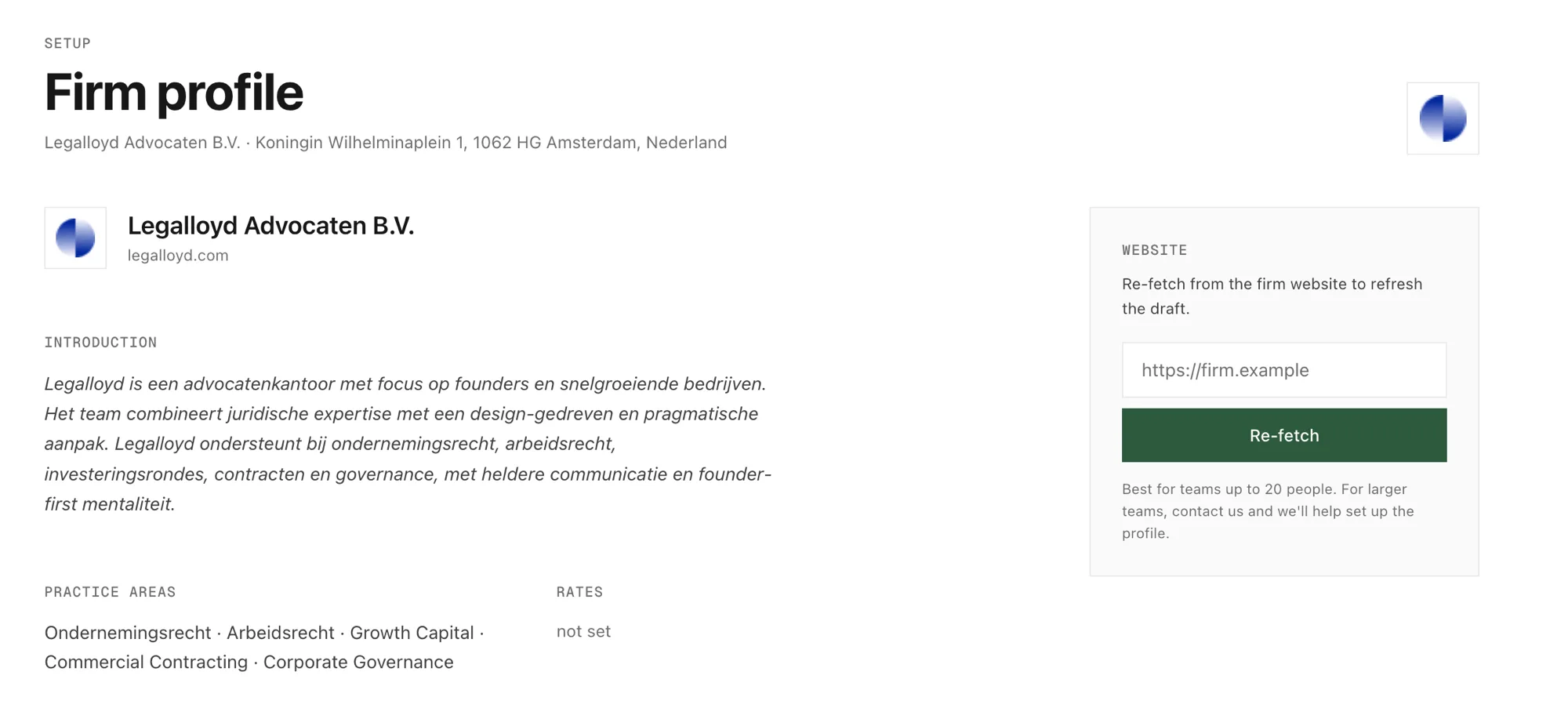
You set up your firm profile once. Point Gordon at your firm’s website and he fetches it, drafting your introduction, practice areas, and team for you to check and edit rather than type from scratch. You fill in your rates and terms, and Gordon carries all of it into every matter so you are not re-explaining yourself each time.
You can also give Gordon your workflows: the kinds of matter you handle often. An investment round, say, that always runs through the same four phases. You describe it once in chat, or paste a memo or an old proposal and let Gordon distill it, and he turns it into a reusable template: the phases, the concrete deliverables in each, realistic timing, and a fee indication, all in client-friendly language. When a matter of that type comes in, Gordon builds the proposal on your own structure instead of from a blank page.
Then, per matter, he gathers context the way a good colleague would, one question at a time, never a form to fill in. He can read the documents already in your Mino workspace, the correspondence and the contracts, so the proposal reflects the actual matter rather than a template.
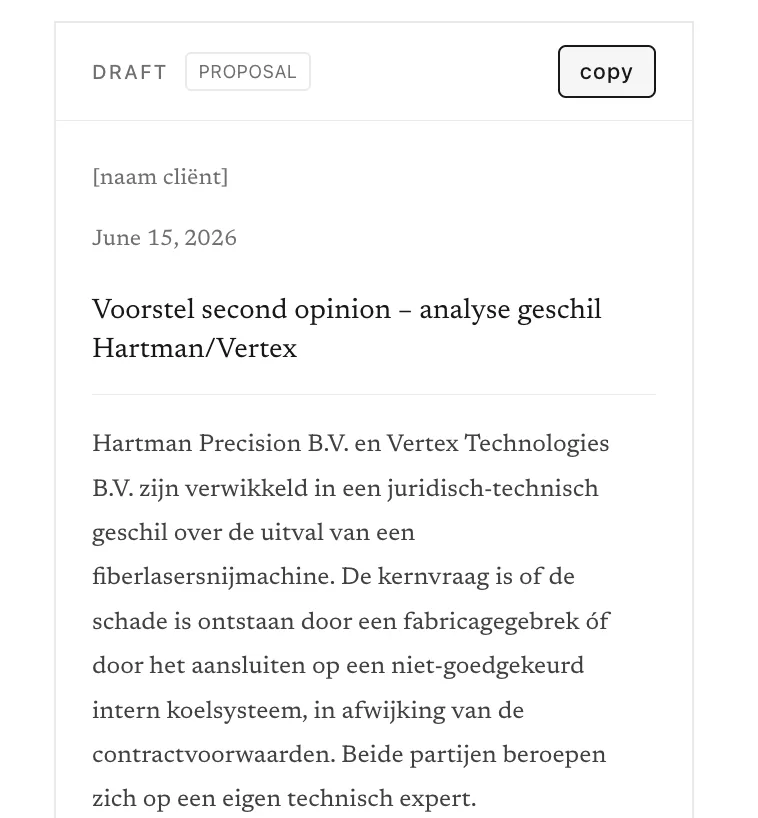
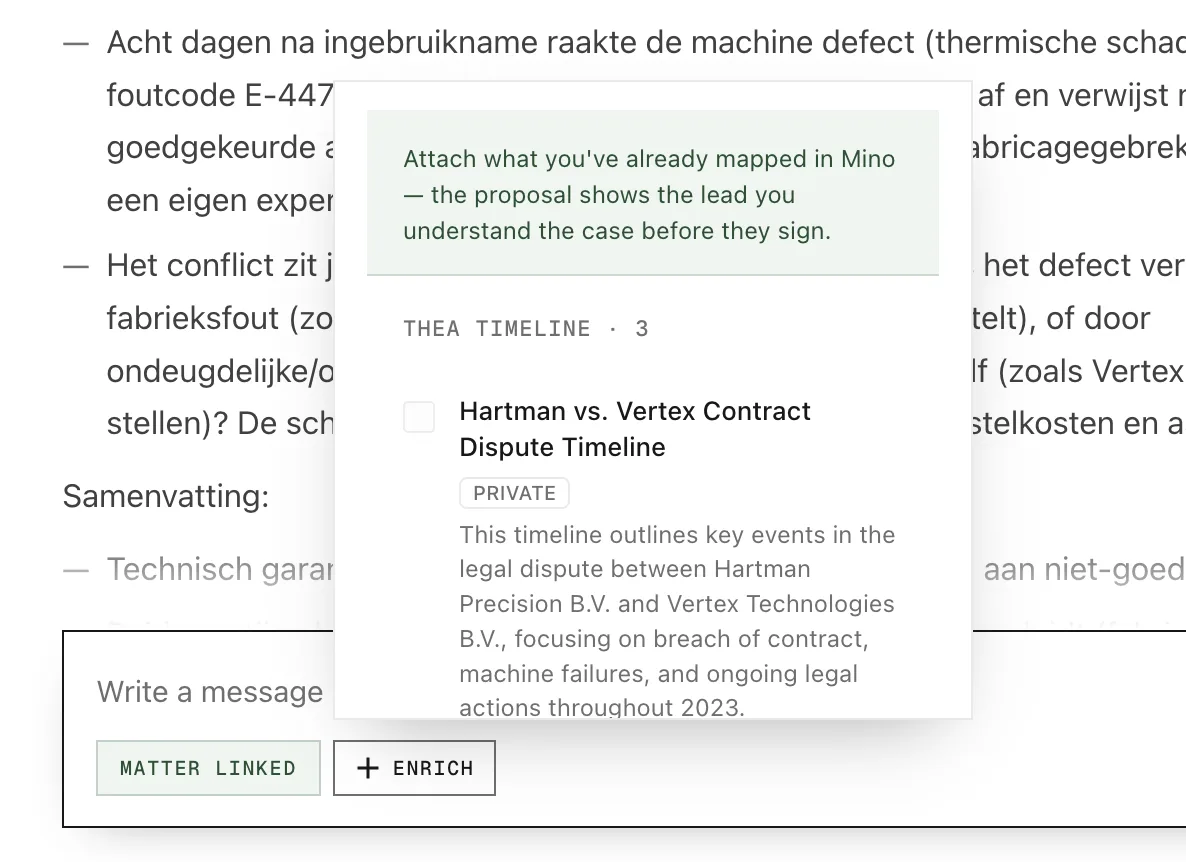
Drafting a proposal. Gordon writes a proposal you can read, edit, and paste straight into an email. Plain text, no Word or PDF export to wrestle with, with the fixed-fee amounts left as placeholders for you to set. Where it helps, he will suggest splicing in a Thea visual timeline of the matter, so the client sees you have already understood their situation.
Reading the reply. Paste in what the lead wrote back and Gordon diagnoses what is really going on. A price objection is rarely about price. He names the objection type and gives you a way through it, anchoring and reframing rather than reflexively discounting.
Advising the next move. Quiet for two weeks? Gordon drafts the follow-up that keeps your standing. Mid-negotiation? He coaches the move, not just the words.
Why a coach and not a proposal generator
The easy version of this product is a form: enter the client, the matter, the fee, click generate, paste. We did not build that, and the reason matters.
The value in winning work was never in the template. It is in the judgment: when to anchor, when to hold the price, what a given objection actually means, when silence is a no and when it is just a busy week. A generator hands you a document. A coach makes you better at the next deal too.
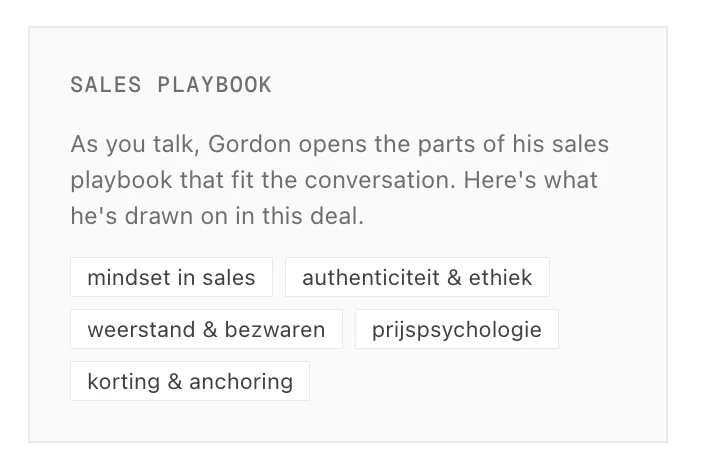
Gordon’s advice is grounded in a body of sales knowledge distilled into skill documents he draws on per situation, selected to fit the moment rather than pattern-matched on keywords. He gives you what an experienced rainmaker would, not what a generic model thinks sales should sound like.
Gordon and the rest of the suite
Thea reads the facts of a matter. Garry maps the arguments. They work once the matter is yours.
Gordon works on the step before that: turning a promising conversation into a matter in the first place. And he hands off cleanly, the Thea timeline that strengthens a proposal is the same timeline you will work from once the engagement is signed.
The deal cycle and the case work are different crafts. Mino gives you a specialist agent for each.
Gordon works in English and Dutch, and is available as part of a Mino subscription.
Maurits Fornier is co-founder of Mino and founder of Patroon Legal Design. He spent five years as a litigator at Freshfields and ten years in legal design and technology. You can follow him on LinkedIn.


