Thea gives you the facts


Every case starts the same way. You read everything, reconstruct the story, and build the timeline yourself. Thea does that for you — so you can spend your time on the work that actually needs a lawyer.
I’ve spent fifteen years making sense of case files — first as a litigator, then building legal visualisations for law firms. Every new matter started the same way. A stack of documents lands on your desk. Emails, contracts, memos, WhatsApp threads. Your job is to make sense of it all — to figure out what happened, in what order, and who did what.
Before you can think about the law, you need the facts. And getting to the facts is slow, manual, and surprisingly draining. You read everything, highlight, take notes, and slowly piece together a story in your head. Then you turn that story into something a client or judge can follow. You drag boxes around in PowerPoint. You redo it when new documents come in. You redo it again when the framing changes.
This was never the hard part of litigation. The hard part is the legal analysis, the strategy, the argument. But I spent a disproportionate amount of time on the reconstruction work that comes before any of that. And every litigator I know has the same experience.
That frustration is why we built Thea.
It starts with a briefing
In ten years of building legal visualisations at Patroon, one thing was true every time: the quality of the output depended on the briefing. Not the data, not the tools — the instruction. What is this for, who is the audience, what question does it need to answer.
If you’ve ever instructed a junior associate, you know the same principle. “Read everything and tell me what you think” produces a very different result than “Map every decision the buyer made after closing that affected revenue.”
We built that discipline into Thea. Before she reads a single document, you brief her.
You tell her what the timeline is for. Who the audience is. What to focus on. What the key question is that the timeline needs to answer. A timeline for a judge reads differently than one for a mediation. A timeline built to show causation has a different structure than one built to establish what a party knew at a specific moment.
This is not a detail of how Thea works. It is the core of how she works. The briefing is what turns a pile of documents into a directed, useful analysis. Without it, you just get a summary. With it, you get something you can actually work with.
A sourced timeline and every key person in one view
You upload your source documents — emails, contracts, letters, WhatsApp screenshots, internal memos, whatever you have. Thea reads them under the direction of your briefing and returns two things.
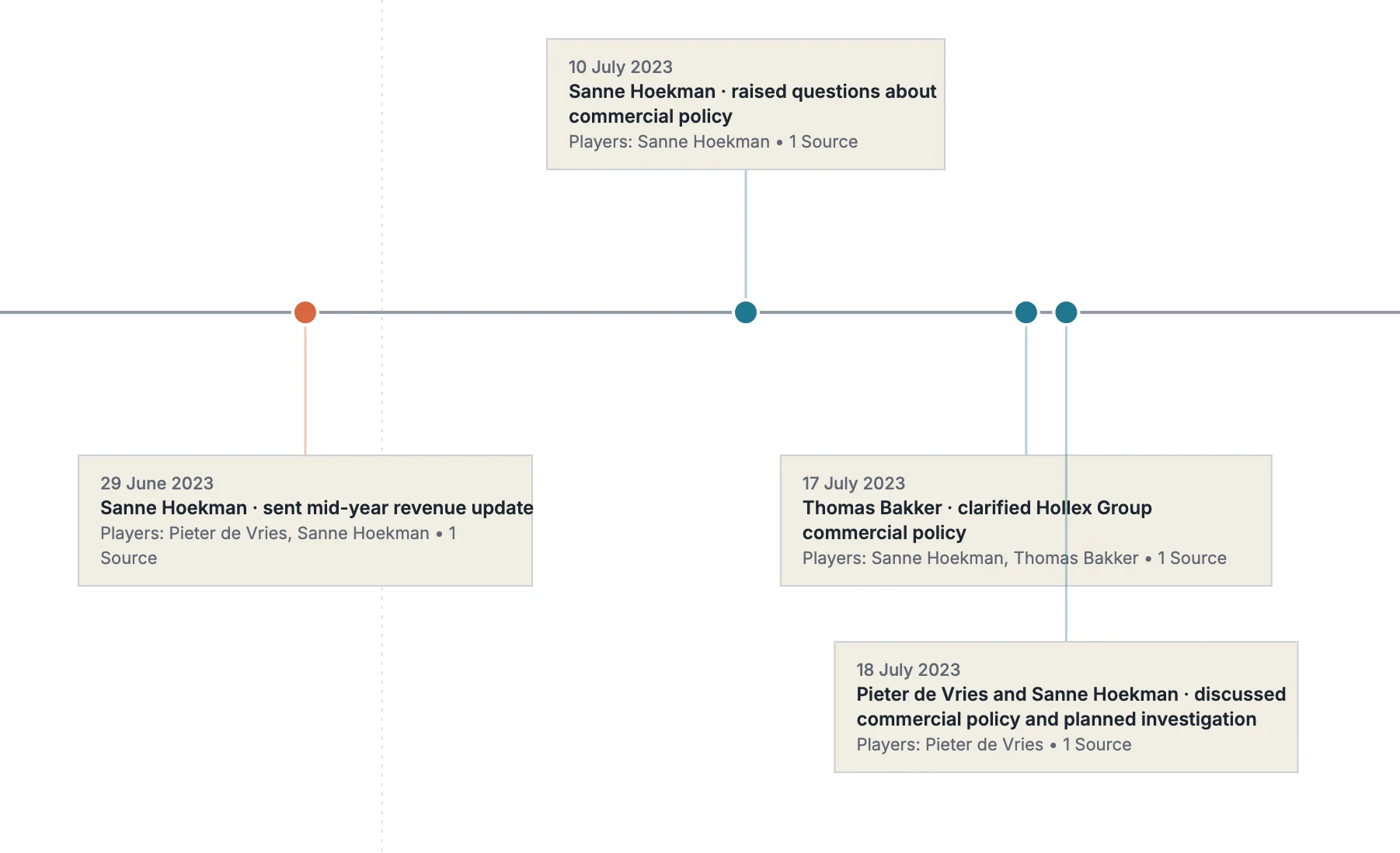
A structured timeline, where every event is linked to its source document and attributed to the people involved. Not a summary you have to trust. A navigable, verifiable record of what happened.
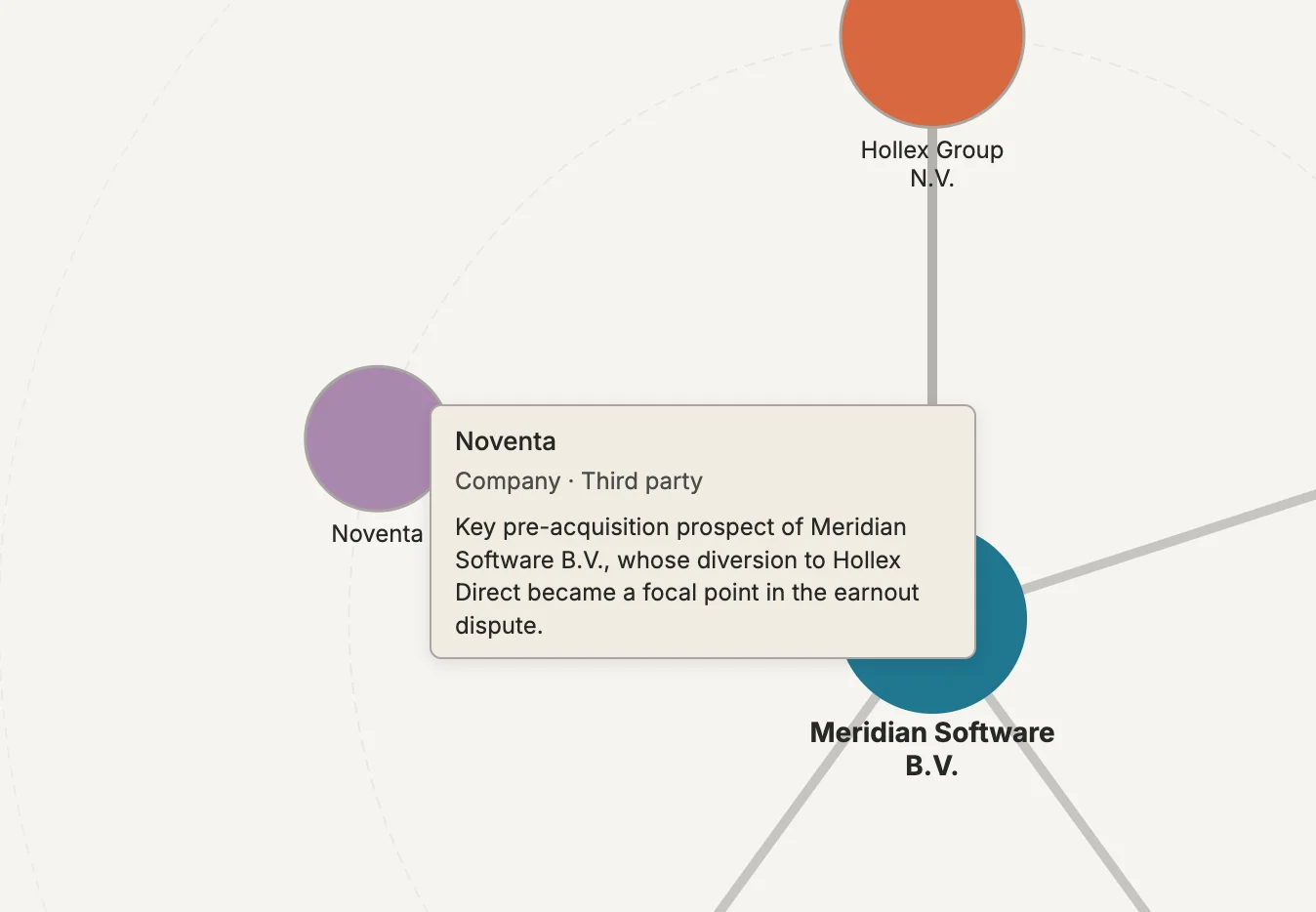
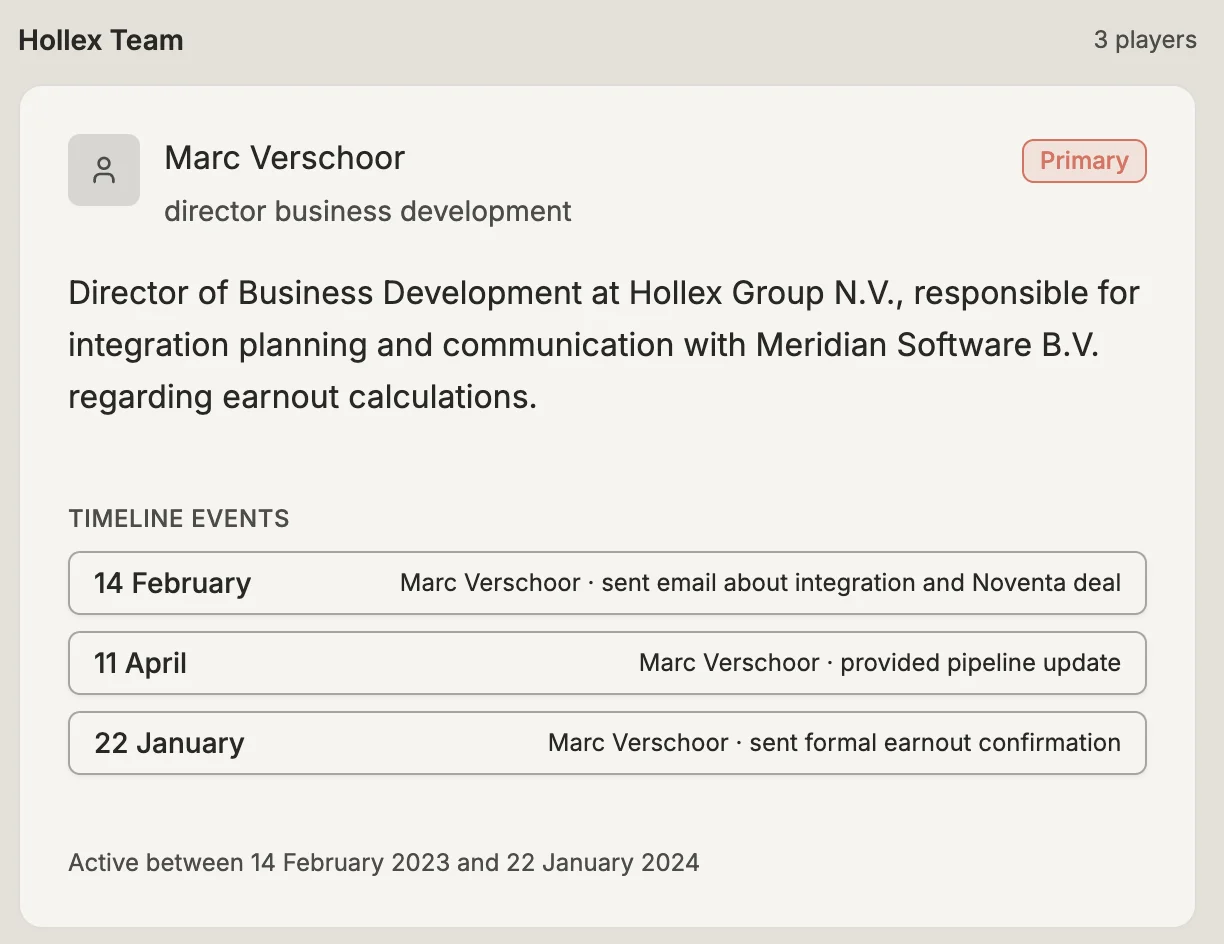
Every key person in one view. Who had authority, who communicated with whom, how the players connect across the matter. Click any person and you see their role, their connections, and a timeline of their involvement.
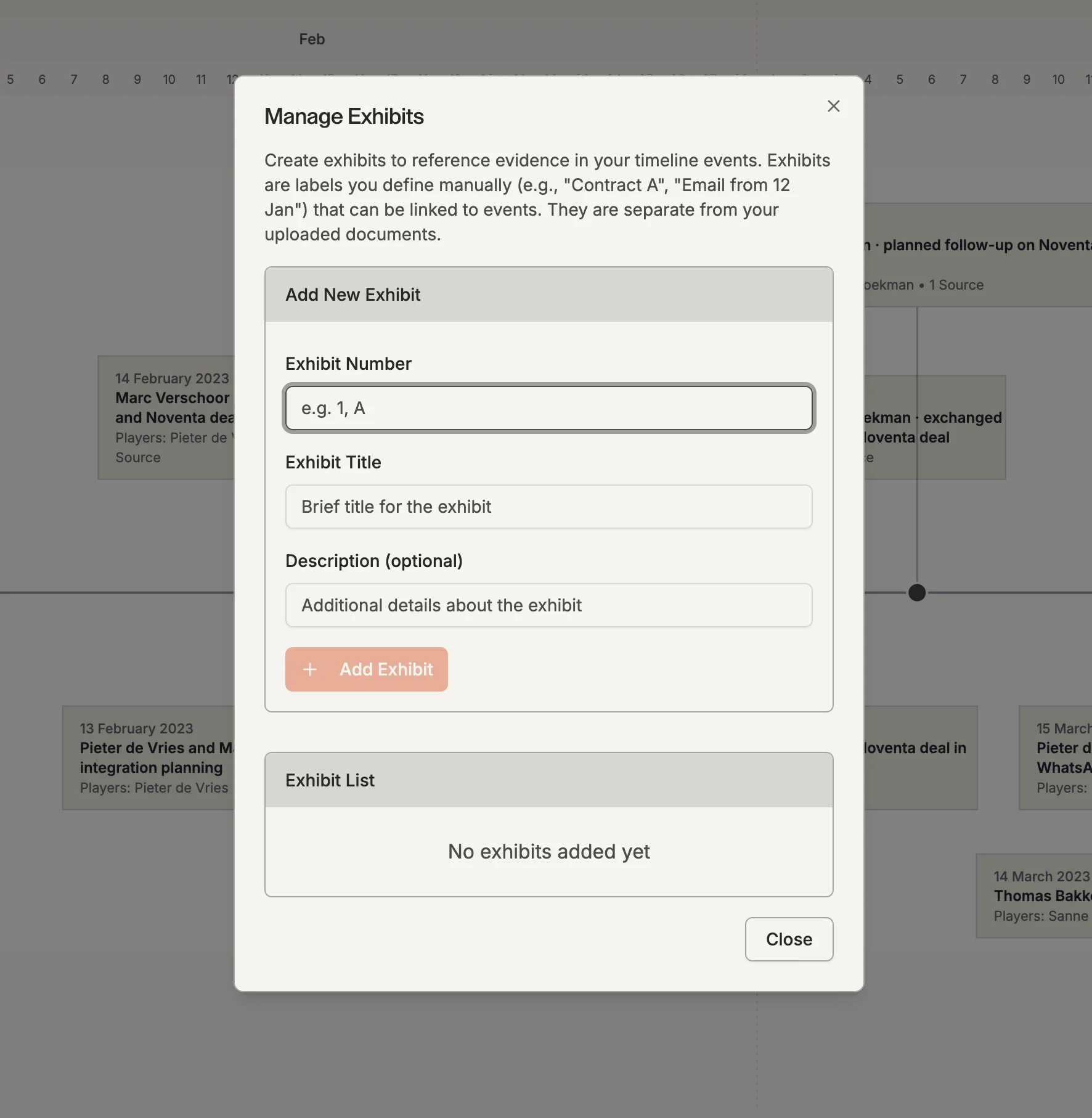
You manage your sources through exhibits — labels you define that link evidence to timeline events, separate from your uploaded source documents.
From days of reading to a structured first draft
Think about what it normally takes to get here. Days of reading, highlighting, cross-referencing. Reconstructing the story in your head before you can put it on paper. Manually building a timeline entry by entry. That is the work Thea compresses into thirty minutes.
What you get is a structured, sourced, navigable overview of your case — directed by your own briefing. You will refine it. You will add context, adjust framing, sharpen the narrative. That is your job and it is where your expertise matters. But the foundation is already there: events linked to sources, people mapped to roles, a chronology you can navigate instead of one you have to build from scratch.
Part of something bigger
Thea is one agent in the Mino platform. The idea behind Mino is simple: specialist agents that each do one defined job well, built by lawyers who have done these jobs themselves.
We built this for the litigator who needs to get a matter up to speed by Friday. For the solo practitioner who just got instructed on a complex dispute and cannot justify two days on a task that should take thirty minutes. For any lawyer who would rather spend their time on the work that makes a difference.
Thea is available now as part of a Mino Pro subscription.
Maurits Fornier is co-founder of Mino and founder of Patroon Legal Design. He spent five years as a litigator at Freshfields and ten years in legal design and technology. You can follow him on LinkedIn.


