Why Legal AI Demos Keep Missing the Point

Last week at the Iuris Congres in Amsterdam, I watched a room full of lawyers navigate the same confusion I see everywhere. Panel after panel, demo after demo, everyone nodding along. And at the end? The practical advice boiled down to: “Get ChatGPT Pro and start experimenting.”
Fair enough. But nobody asked the obvious question: “What do I actually do with it?”
The Showroom Problem
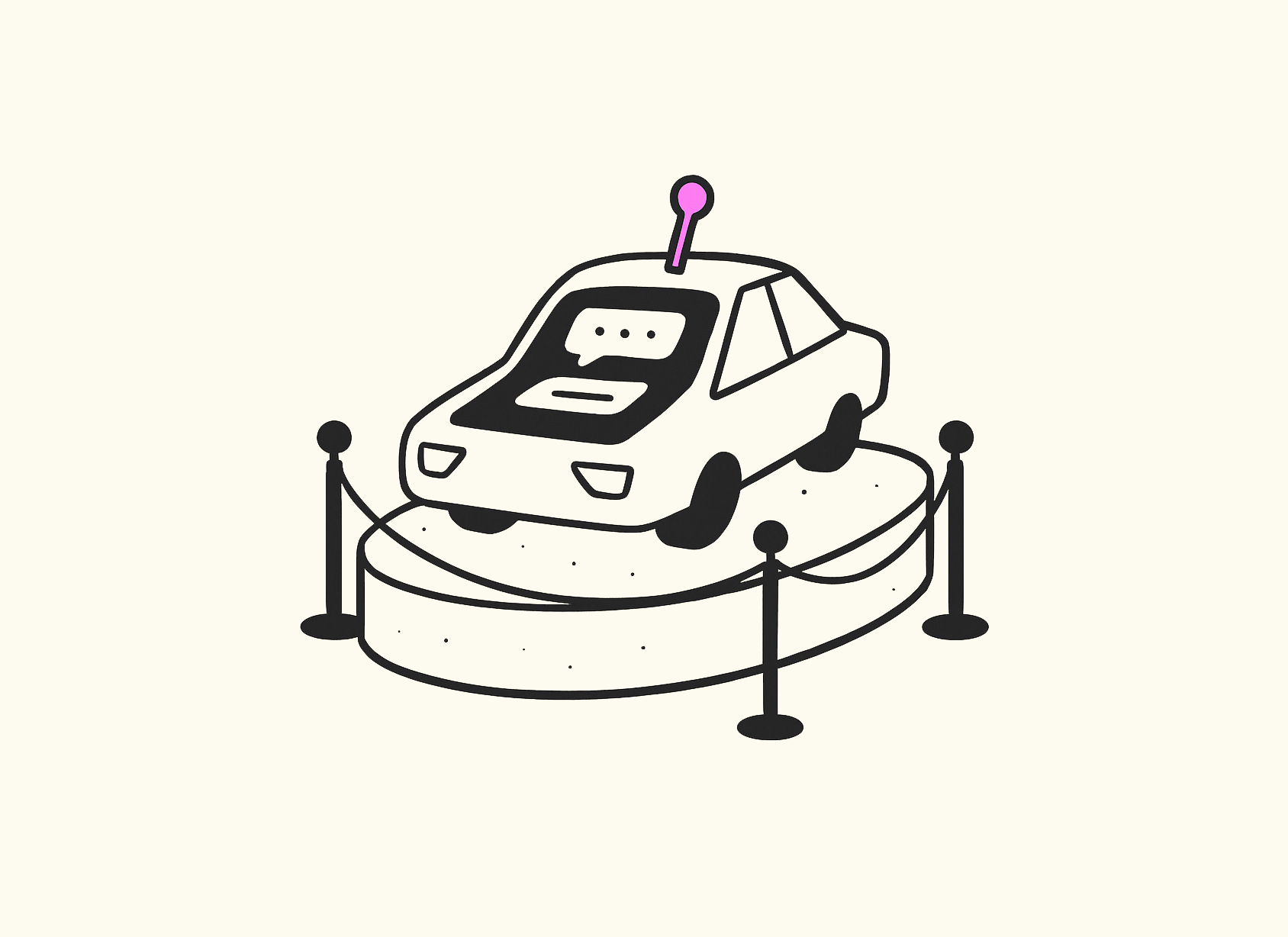
Here’s what’s happening: Chat interfaces have become the default way to show what AI can do. They’re impressive. You can ask anything, get an answer to anything. It’s the concept car at the auto show—stunning, futuristic, gets everyone excited.
But you can’t drive it to work.
These interfaces work brilliantly for certain things. Need a couscous recipe? Perfect. Want an itinerary for Norway? Done. But for actual legal work—work that requires precision, structure, and reliability—they fall short. Not because the technology is bad, but because the interface isn’t built for the job.
What Lawyers Actually Know
By now, most lawyers who’ve touched AI understand the basics:
- Yes, it hallucinates
- Yes, the quality can disappoint
- Yes, it’s probabilistic, not deterministic
The issue isn’t awareness. It’s application.
I’d estimate 80% of lawyers still approach AI as a content generator. Write my brief. Draft my memo. Produce my contract. And when the output needs significant work, they think: “This isn’t ready for me.”
But that’s not what these tools do best. They transform. They structure. They analyze existing content. Feed them your case documents, and they can build timelines. Give them transaction data, and they can map structures. The input matters more than the prompt.
The Buyer’s Dilemma
At the conference, someone showed a demo of their platform—click here for this function, click there for that template. “Look,” they said, “you don’t even need to think of the prompts yourself.”
I watched lawyers lean forward, interested. But I also saw the question on their faces: “Which of these buttons applies to my practice?”
Because here’s the landscape:
- Some tools are built for American legal systems
- Some are hyper-specialized for litigation
- Some are generic platforms with features you’ll never use
- Most require you to figure out when and how to use them
The question isn’t “What can I buy?” It’s “What do I need this for?”
The Prompt Box Problem
Even when lawyers get access to AI tools, there’s a moment of paralysis. The blank prompt box. The blinking cursor. “Okay, now what?”
You can ask it anything. Which means you need to know what to ask. And when. And how. And whether the answer will be good enough to use.
This isn’t a training problem. It’s a design problem.
The question the industry keeps answering is: “What can AI do?”
The question lawyers actually need answered is: “When do I use this?”
What Actually Works
The solution isn’t a platform. It’s not a chatbot. It’s a tool that does one thing well: takes your specific input, delivers your specific output. No blank prompt box. No figuring out what to ask. Just: I need this → I get this.
Think about the tools you use every day. Your case management system doesn’t ask you to prompt it. Your document automation doesn’t require you to figure out when to use it. They solve specific problems with specific interfaces designed for those problems.
That’s what legal AI needs to become.
The Missing Middle
We have general-purpose AI that can do anything (but requires you to specify everything). We have enterprise platforms that promise to transform your practice (but require committees and budgets).
What’s missing is the middle: focused tools that solve specific problems. Where the use case is the interface. Where there’s no onboarding because there’s nothing to learn—you just use it.
No drop-off points. No “let me figure out how this works.” No wondering if you’re using it right.
Just tools that work.
What Comes Next
The legal AI market is still in its demo phase. Companies are selling capability and potential. They’re showing what’s possible and asking lawyers to imagine the applications.
But lawyers don’t need imagination. They need solutions.
The gap between “look what this can do” and “here’s what you do with it” is where adoption stalls. It’s where enthusiasm turns into confusion, and confusion turns into “maybe later.”
Later is expensive. Not just in money—in time, in competitive advantage, in the simple ability to do your work better.
The industry needs to stop selling AI and start solving problems. Small ones. Specific ones. The kind where a lawyer can say: “Yes, I need that. Right now.”
That’s when this technology stops being a demo and starts being a practice.
Interested in legal AI tools that actually solve specific problems? Learn more about Mino


